2024 Word Search Puzzle Book 14: A Practical Tool for Focus, Learning, and Daily Routine
Word search puzzles have been a staple of casual entertainment for decades, but the 2024 Word Search Puzzle Book 14 offers something more than just a way to pass the time. For professionals, creators, educators, and anyone managing a busy schedule, this puzzle book can serve as a structured tool for mental warm-ups, vocabulary reinforcement, and even workflow transitions. Understanding how to integrate it into your day can turn a simple pastime into a practical asset.
What Sets This Puzzle Book Apart
The 2024 Word Search Puzzle Book 14 is part of a larger series, but this volume brings a curated collection of themed grids designed to challenge and engage. Each puzzle begins with a grid of seemingly random letters, and the task is to locate a predefined list of hidden words. These words may run horizontally, vertically, diagonally, or even backward, requiring careful scanning and pattern recognition.
What makes this edition particularly useful is its thematic organization. Themes range from nature and science to literature, business terminology, and seasonal topics. This structure allows you to choose puzzles that align with your current focus—whether you are brushing up on industry vocabulary or simply looking for a mental reset between tasks.
Where It Fits in a Productive Routine
One of the most practical aspects of the 2024 Word Search Puzzle Book 14 is its flexibility. It can be used at different points in your workflow, depending on your goals.
Before a Task: Mental Warm-Up
Starting a complex project can feel like staring at a blank wall. A quick word search puzzle—perhaps five to ten minutes—can serve as a low-stakes warm-up. It shifts your brain into pattern-recognition mode, improves focus, and reduces the inertia that often precedes difficult work. For writers, marketers, or designers, this can be especially helpful before brainstorming or drafting sessions.
To make this effective, keep the puzzle book at your desk. Pick a theme related to your upcoming work if possible; for example, a nature-themed puzzle before writing about environmental topics, or a business-themed grid before a strategy meeting.
During a Break: Structured Reset
Mid-afternoon slumps are common, and scrolling social media often leaves you more drained than refreshed. A word search puzzle offers a structured, screen-free break that still engages your mind. The act of scanning for words requires just enough concentration to pull you away from work thoughts without demanding the same cognitive load as your main tasks.
Keep a pencil handy and set a timer for ten minutes. This creates a clear boundary between work and break, preventing the puzzle from turning into a distraction.
After a Task: Transition and Reflection
Completing a major deliverable can leave your mind racing. A short puzzle session after finishing a task helps you transition smoothly to the next item on your list. It provides a mental cooldown while reinforcing the habit of closure—you finish the puzzle, and then you move on. For freelancers and entrepreneurs managing multiple projects, this ritual can improve task switching and reduce mental clutter.
Integrating Into Learning and Skill-Building Workflows
The 2024 Word Search Puzzle Book 14 is not just for relaxation. It can be part of a deliberate learning process, especially for vocabulary retention and subject familiarity.
Reinforcing New Terminology
If you are learning a new field—whether it is digital marketing, biology, or project management—seeing terms in a puzzle grid can reinforce spelling and recognition. After studying a set of terms, find a themed puzzle that includes related vocabulary. The search process forces you to visually re-encounter each word, which strengthens memory through repetition in a different context.
For educators and trainers, this approach works well as a low-pressure review activity. Students or team members can complete a puzzle as a warm-up before a lesson or as a recap after a session.
Pairing With Other Resources
The puzzle book works alongside other learning tools. For instance, you might use a vocabulary app or flashcard set to introduce terms, then use a word search puzzle to reinforce them visually. Alternatively, after reading an article or chapter, choose a puzzle with a matching theme to solidify key concepts. This layered approach to learning is more effective than any single method alone.
Practical Implementation Tips
To get the most out of the 2024 Word Search Puzzle Book 14, consider these workflow-oriented strategies:
- Prep your environment. Keep the book, a pencil, and a highlighter in a dedicated spot. This reduces friction when you want to use it during a break or transition.
- Choose themes intentionally. Align the puzzle theme with your current project or learning goal. This turns a casual activity into a targeted reinforcement exercise.
- Set a time limit. For warm-ups or breaks, use a timer to avoid overindulging. Five to fifteen minutes is usually enough to gain the benefit without losing momentum.
- Track your progress. Mark the date and completion time for each puzzle. Over weeks, you will notice improvement in speed and accuracy, which serves as a tangible measure of cognitive sharpness.
- Use it as a team activity. In a classroom or team meeting, a shared puzzle can serve as an icebreaker or a collaborative warm-up. This builds engagement and breaks the monotony of standard meeting openers.
Factors That Affect Usability and Long-Term Use
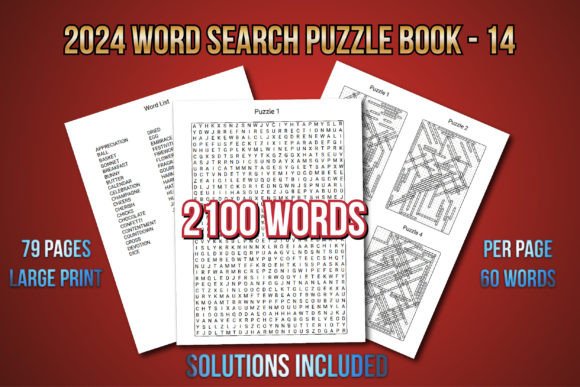
Not every puzzle book is built for repeated, practical use. The 2024 Word Search Puzzle Book 14 stands out because of its layout, paper quality, and thematic variety. Grids are clearly printed with readable fonts, and the word lists are placed conveniently near each puzzle. This reduces eye strain and makes the experience smoother, especially for adults who may be using the book during short breaks or while commuting.
For long-term use, consider how the book fits into your routine. If you travel frequently, its portable size is a plus. If you prefer digital tools, you could photograph completed puzzles for a personal log. The key is to treat the book as a recurring resource rather than a one-time activity.
Consistency Over Intensity
The real value of the 2024 Word Search Puzzle Book 14 emerges with regular, short sessions rather than occasional long ones. Doing one puzzle per day—or even three per week—builds a habit that supports mental agility. For professionals managing high cognitive load, this consistency can contribute to better focus and quicker pattern recognition over time.
Quality Control and Choosing the Right Approach
Not all puzzles in the book will match your interests, and that is fine. The goal is not to complete every grid but to use the ones that serve your current needs. Skim the theme list at the beginning of the book and flag puzzles that align with upcoming projects or learning goals. This targeted approach increases the likelihood that you will actually use the book regularly.
If you are an educator or trainer, preview puzzles before assigning them to a group. Check that the vocabulary matches the level of your audience and that the theme supports your learning objectives. This small effort in preparation pays off in engagement and retention.
Use Cases Across Different Roles
The 2024 Word Search Puzzle Book 14 adapts naturally to various professional and personal contexts:
- Marketers and writers can use themed puzzles to explore vocabulary around specific topics before drafting content.
- Entrepreneurs and small business owners can use puzzles as quick mental breaks between client calls or financial reviews.
- Educators and trainers can incorporate puzzles into lesson plans as warm-ups, review activities, or bell ringers.
- Freelancers and creators can use puzzles to transition between projects, reducing mental drag and improving focus.
- Productivity-minded individuals can treat puzzle completion as a micro-goal, reinforcing the habit of finishing small tasks before moving to larger ones.
Final Observations on Integration
The 2024 Word Search Puzzle Book 14 is more than a collection of games. When used intentionally, it becomes a tool for cognitive warm-up, vocabulary reinforcement, and structured transition between tasks. Its thematic variety and accessible layout make it suitable for daily use, whether you are at a desk, in a classroom, or working remotely.
To integrate it smoothly into your routine, start small. Choose one consistent time slot—perhaps after lunch or before a recurring meeting—and keep the book there. Over time, you will likely find that the few minutes spent scanning for words sharpen your attention and provide a reliable anchor in your day. The key is not to force it into every moment but to use it where it fits naturally within your existing workflow.
For anyone looking to combine leisure with purpose, the 2024 Word Search Puzzle Book 14 offers a practical, low-friction way to keep your mind engaged without adding complexity to your schedule.