The Complete Guide to Using a Fire Safety Log Book for Compliance and Peace of Mind
Fire safety is one of those responsibilities that can feel overwhelming—until you have the right system in place. Whether you manage a small office, run a retail shop, oversee a school, or own rental property, keeping track of fire safety checks, equipment inspections, and staff training is essential. That is exactly where a Fire Safety Log Book becomes your most practical ally. Far more than a simple notebook, this structured record-keeping tool helps you stay compliant with regulations, protect lives, and prove due diligence in the event of an inspection or incident.
In this guide, we will explore what a Fire Safety Log Book is, why it matters, what it should contain, and how using a professionally designed digital version can save you time, money, and stress. By the end, you will understand not only how to use one but also why it is a cornerstone of any responsible fire safety strategy.
What Is a Fire Safety Log Book?
At its core, a Fire Safety Log Book is a dedicated record-keeping document used to log all fire safety related activities within a building or premises. It serves as a central repository for documenting inspections, tests, maintenance, training, and any incidents or drills. Think of it as the official diary of your fire safety regime.
A well-designed log book typically includes sections for:
- Fire risk assessments and review dates
- Equipment testing logs for alarms, extinguishers, emergency lighting, and sprinklers
- Training records for staff fire warden training and general awareness sessions
- Drill and evacuation records with dates, times, and observations
- Incident reports for any fire related events or near misses
- Maintenance schedules and contractor visit logs
- Emergency contact information and building occupancy details
Whether you choose a printed book or a digital product that you can download and print yourself, the purpose remains the same: to create a clear, auditable trail of your fire safety efforts.
Why Every Business and Property Owner Needs a Fire Safety Log Book
It might be tempting to assume that fire safety logs are only necessary for large corporations or high risk facilities. In reality, any commercial premises, educational institution, or rented property has a legal and moral obligation to maintain adequate fire safety records. Even small businesses and shared workspaces benefit enormously from a structured approach.
Legal Compliance
In many jurisdictions, including the United Kingdom under the Regulatory Reform (Fire Safety) Order 2005, the responsible person (usually the employer, owner, or occupier) must document fire safety measures. A Fire Safety Log Book provides the evidence that you have fulfilled your duties, from testing alarms to reviewing risk assessments. Without it, you may struggle to prove compliance during a fire safety inspection.
Protecting Lives and Property
The primary purpose of fire safety is, of course, to protect people. A log book helps ensure that equipment is regularly tested and maintained, that staff know what to do in an emergency, and that any issues are identified and addressed promptly. It is a practical tool that directly reduces risk.
Insurance and Liability
Insurance providers often require proof of regular fire safety checks. In the event of a claim, a well maintained log book can demonstrate that you took reasonable precautions. Conversely, gaps in your records could be used to question your diligence, potentially affecting payouts or legal liability.
Key Components of an Effective Fire Safety Log Book
Not all log books are created equal. A truly useful Fire Safety Log Book strikes a balance between comprehensive coverage and ease of use. Here are the sections that should be included in any professional grade version:
Fire Risk Assessment Records
Your risk assessment is the foundation of your fire safety strategy. The log book should record the date of the last assessment, who conducted it, and when the next review is due. It should also note any significant findings or actions taken.
Equipment Testing and Maintenance Logs
This is often the most used section. It should include separate pages or tables for:
- Fire alarm tests (weekly and monthly)
- Emergency lighting tests (monthly and annual)
- Fire extinguisher inspections (monthly and annual)
- Fixed fire suppression system checks
- Smoke control system tests
- Any other fire safety equipment on site
Staff Training and Fire Drills
Keeping a record of who has been trained, when, and what was covered is essential. Similarly, fire drill logs should include the date, time, evacuation time, and any observations or improvements noted. This is not just about compliance—it helps you continuously improve your emergency preparedness.
Incident and Near Miss Reporting
A dedicated section for recording any fire related incidents, no matter how small, allows you to track trends and address recurring issues. Near misses are particularly valuable as they highlight potential risks before they cause harm.
Maintenance and Contractor Visits
When a technician services your fire alarm system or replaces an extinguisher, that visit should be logged. Include the date, company name, work performed, and any recommendations. This creates a complete service history for every piece of equipment.
How a Fire Safety Log Book Supports Regulatory Compliance
Understanding the regulatory landscape helps clarify why a log book is more than just good practice—it is often a legal requirement. Under the Regulatory Reform (Fire Safety) Order 2005 (England and Wales) and equivalent legislation in Scotland and Northern Ireland, the responsible person must:
- Carry out a fire risk assessment
- Identify and implement necessary fire safety measures
- Maintain those measures in effective working order
- Provide information and training to employees
- Plan for emergencies and practice evacuation procedures
A Fire Safety Log Book provides the documentary evidence that you have fulfilled these duties. During an inspection by the local fire and rescue service, the enforcing officer may ask to see your records. A complete and up to date log book demonstrates a proactive approach and can significantly reduce the risk of enforcement action, fines, or even prosecution.
Moreover, for schools, care homes, hospitals, and other regulated premises, a log book is often a requirement of specific sector regulations or inspection frameworks. For instance, in education, Ofsted inspectors may review fire safety records as part of their assessment of leadership and management.
Practical Tips for Maintaining Your Fire Safety Log Book
Owning a log book is only half the battle; the real value comes from using it consistently. Here are some practical tips to get the most out of your Fire Safety Log Book:
- Designate a responsible person to oversee fire safety records and ensure entries are made on time.
- Set reminders for regular tests and reviews—weekly alarm tests, monthly extinguisher checks, and annual training updates.
- Keep it accessible in a known location so that staff, contractors, and inspectors can find it easily.
- Review entries quarterly to spot any patterns or recurring issues that need attention.
- Use a digital or printable version that is clearly laid out and easy to fill in, reducing the chance of skipped entries.
- Back up digital copies if you use an electronic format, and keep a printed version on site if possible.
Why Choose a Digital Fire Safety Log Book?
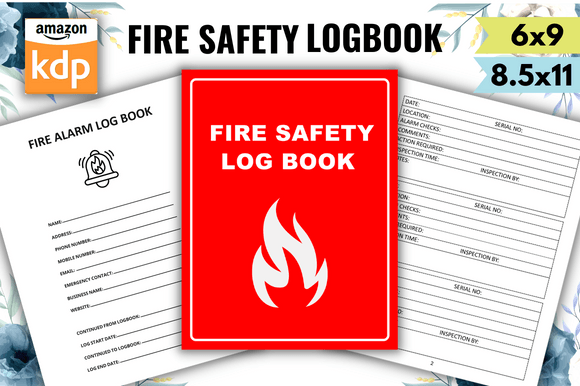
Traditionally, log books were printed and purchased from office supply stores. Today, a digital Fire Safety Log Book offers distinct advantages, especially for those who value flexibility and convenience. Our digital product is designed specifically for users who want to download, print, or upload to platforms like KDP (Kindle Direct Publishing).
Here is what you get with a professionally designed digital Fire Safety Log Book:
- Two size options: standard 8.5″ x 11″ (US letter) and compact 6″ x 9″—perfect for different binding preferences or portability needs.
- 105 pages of structured, ready to use log sections covering all essential fire safety records.
- Bleed settings included so that if you print professionally, your content extends to the edge of the page for a polished finish.
- High quality 300 PPI resolution for crisp, clear text and professional appearance.
- Two interior PDF files (one for each size), ready to print at home, at a local print shop, or upload directly to KDP for on demand publishing.
This format is ideal for small business owners, property managers, safety consultants, or anyone who prefers to control their own printing costs and timeline. You can print one copy for immediate use and store the digital file for future reprints, making it both economical and sustainable.
Common Misunderstandings About Fire Safety Log Books
Despite their importance, several myths persist about Fire Safety Log Books. Let us clarify a few:
- “It is only for large companies.” In fact, any premises with employees, customers, or residents has a duty to keep records. Size does not exempt you.
- “A basic notebook is enough.” While any record is better than none, a dedicated log book with preformatted sections ensures nothing is overlooked and makes inspections much smoother.
- “I only need to fill it in once a year.” Fire safety is an ongoing responsibility. Weekly tests, monthly checks, and regular training should all be logged promptly.
- “The fire service never checks it.” Inspections do happen, and when they do, incomplete or missing records can lead to enforcement action. It is better to be prepared.
How to Get Started with Your Fire Safety Log Book Today
Implementing a proper fire safety recording system does not have to be complicated. Start by assessing what type of premises you manage and what specific equipment and procedures apply. Then choose a log book format that matches your needs.
Our Fire Safety Log Book digital product is designed to be immediately useful. Simply download the PDF files, choose your preferred size (8.5″ x 11″ or 6″ x 9″), and print as many copies as you need. The formatted pages guide you through every key aspect of fire safety documentation, from daily checks to annual reviews.
For more business and safety resources, please visit our store. We are committed to providing practical tools that help you stay organised, compliant, and confident in your fire safety management.
Final Thoughts
A Fire Safety Log Book is far more than a bureaucratic requirement. It is a practical, life saving tool that supports a culture of safety and preparedness. By documenting your fire safety activities systematically, you protect the people in your building, meet your legal obligations, and demonstrate a professional commitment to risk management.
Whether you are new to fire safety responsibilities or looking to improve your current system, investing in a well designed log book—especially a versatile digital version that you can print on demand—is a smart and responsible step. Take control of your fire safety records today, and enjoy the peace of mind that comes from knowing you are truly prepared.