Medium Forest Green Notepad Templates: What to Know Before You Buy or Create KDP Interiors
If you are looking to publish a notepad on Amazon KDP, the design and layout of your interior matter more than most first-time creators realize. The Medium Forest Green Notepad Templates product offers a complete set of ready-to-upload interiors that save time and reduce guesswork. But even with a solid template in hand, small oversights can lead to rejected files, poor formatting, or a product that doesn’t resonate with buyers. This article walks through common pitfalls, practical corrections, and what you should check before hitting publish.
Understanding What the Template Set Actually Includes
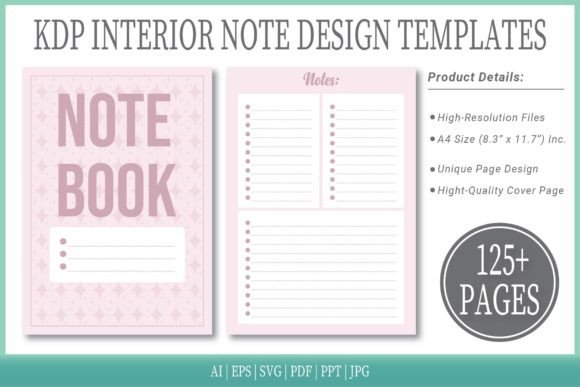
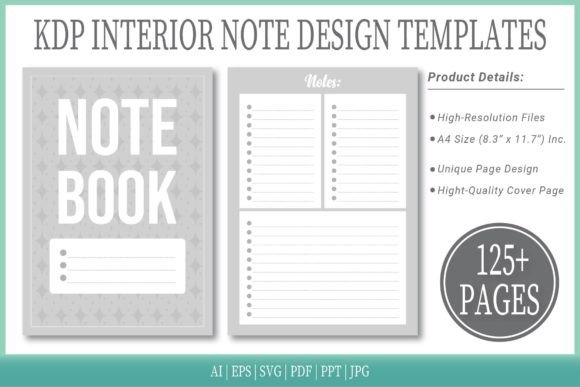
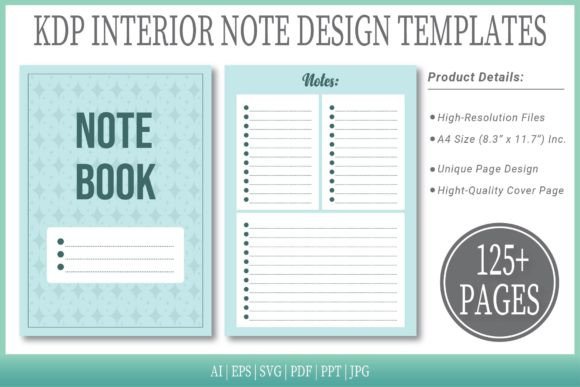
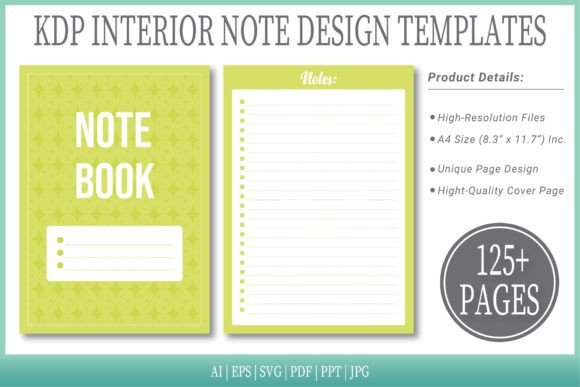
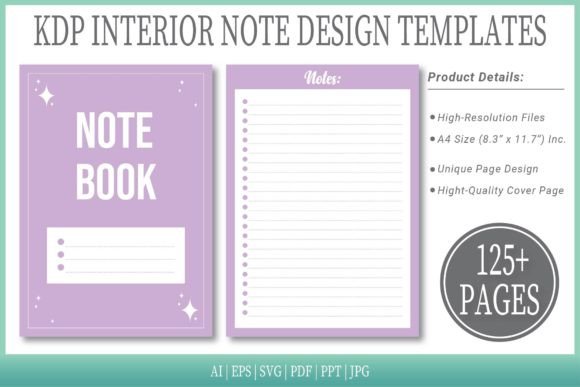
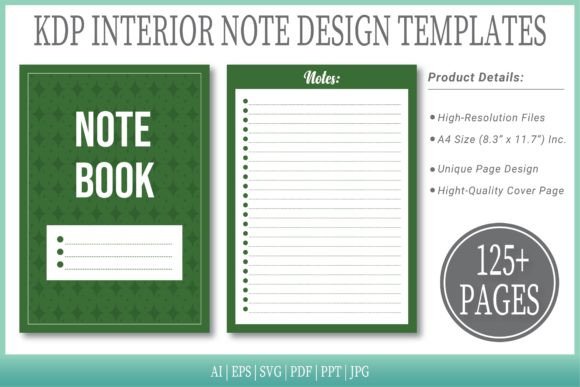
Before you start customizing, it helps to know exactly what you are working with. The Medium Forest Green Notepad Templates package provides 100 interiors ready for upload to KDP or print. The files come in multiple formats: AI, EPS, SVG, PDF, PPT, and JPG. You also get a cover page, 125 pages, and an A4 size (8.3″ x 11.7″ inches) with no bleed.
A common mistake is assuming “ready for upload” means you can skip review. Even with templates, you need to check margins, fonts, and content alignment in your chosen software. No bleed means there is no allowance for trimming, so any element placed too close to the edge may get cut off in print. Always preview your file after opening it, regardless of the format you choose.
Ignoring the Differences Between File Formats
The product includes editable source files in AI, EPS, SVG, PDF, PPT, and JPG. Many beginners default to PDF or JPG without thinking about future edits. If you think you might want to change colors, adjust spacing, or add your own branding, start with the AI or EPS file. These vector formats let you modify every element without losing quality.
Using a raster format like JPG for editing can result in pixelation or limited flexibility. If you are not comfortable with Adobe Illustrator, the PPT format is a good middle ground. It retains much of the structure while being easier to work with in PowerPoint. The SVG format is also useful if you plan to reuse graphics in web projects or other design tools. Understanding which format fits your workflow prevents unnecessary file conversion and quality loss later.
Overlooking the Cover Page Element
One detail that often gets undervalued is the extra cover page included with the template. Some creators focus entirely on the interior and treat the cover as an afterthought. But buyers often decide based on the cover first. The provided cover page can be used as a starting point or as inspiration for your own design.
If you decide to create your own cover, make sure it matches the professional tone of the interior. The Medium Forest Green Notepad Templates carry a calm, natural aesthetic. A cover that clashes with that mood can confuse potential customers. Use the included cover file as a base and adjust your title, author name, and subtitle to fit your niche. This approach saves time and keeps the visual identity consistent.
Misjudging Page Count and Content Density
With 125 pages available across 6 format types, you have flexibility to create a substantial notepad. But more pages do not always mean better value. Some creators pack in too many pages with minimal content, which can feel thin. Others try to cram too much information per page, making the notepad look cluttered.
A notepad interior should feel purposeful. Each page should have clear usage: journal prompts, bullet lists, habit trackers, or simple ruled spaces. Review the template layouts and see how they structure content. If you decide to add your own sections, keep line spacing readable and avoid overfilling the page. White space is not wasted space—it invites use.
If you are targeting a specific audience, such as students or professionals, tailor the page count to their habits. A busy professional might prefer 80 pages of focused layouts over 125 pages with repetition. A hobbyist might appreciate variety. Use the template as a modular kit: choose what fits, remove what does not.
Not Testing the Template in Your Publishing Workflow
One of the most practical mistakes is failing to test the template through the actual KDP upload process before you customize it heavily. Upload a test file straight from the PDF interior to see how it looks in the KDP previewer. Check for alignment, font rendering, and page order.
After you confirm the base template works, then apply your changes incrementally. This saves you from troubleshooting a heavily customized file that may have introduced errors. If you plan to sell printed copies outside of KDP, test a print sample from a local printer or a print-on-demand service. The A4 size with no bleed is straightforward, but printers vary in how they handle margins.
Common Formatting Errors to Avoid
Even with professional templates, certain formatting errors show up repeatedly. Here are a few to watch for:
- Font substitution: If you use fonts not embedded in the PDF, KDP may replace them, changing your layout. Embed fonts or outline text in vector formats.
- Inconsistent margins: The template provides no bleed, but keep content at least 0.5 inches from the edge for safety.
- Missing crop marks or trim marks: Although not required in all cases, including minimal guides can help printers. The templates already handle this, so do not remove them accidentally.
- Color profile mismatches: Use CMYK for print interiors. The template files are set up with print in mind, but if you edit in RGB, colors may shift when printed.
Taking five minutes to check these details before upload prevents rejections and rework.
How to Choose Between the 6 Format Types
With 6 format types available, the decision comes down to your skill level and intended use. Here is a quick guide:
- AI and EPS: Best for professional designers who want full control over vectors. Use these if you plan to rebrand or heavily modify the layout.
- SVG: Great for developers and web use. If you plan to create digital versions or sell on other platforms, SVG keeps scalability intact.
- PDF: The safest choice for direct KDP upload. Minimal editing possible, but reliable for printing.
- PPT: Ideal for users comfortable with PowerPoint. You can make quick text and color changes without learning Illustrator.
- JPG: Useful for previews or quick reference, but not recommended for primary editing due to resolution limits.
If you are unsure, start with the PDF for your first upload and use the AI or PPT file for any customization you want to test. This keeps your base file intact while you experiment.
Thinking Beyond the First Upload
Once you have published your notepad using the Medium Forest Green Notepad Templates, you may want to create variations. Because the template set includes editable source files, you can adjust colors, swap out design elements, and create new editions for different niches. For example, you could change the green tone to a muted blue or add themed icons for wellness, productivity, or travel.
Many creators stop after one product. But with 100 interiors and multiple formats, you have a springboard for a whole line of notepads. The key is to build on what works rather than starting from scratch each time. Keep your source files organized, name your variants clearly, and track which formats you used so you can replicate the process efficiently.
Final Checks Before You Publish
Before you upload to KDP, run through this short checklist:
- Open the template in the format you plan to use and verify all pages are present.
- Check that no element crosses into the no-bleed margin zone.
- If you changed fonts, ensure they are embedded or converted to outlines.
- Preview the PDF in the KDP online previewer. Look for misaligned text or images.
- Review the cover page for consistency with the interior theme.
- Save a backup copy of your final file in PDF format.
Taking these steps does not take long, but it protects you from mistakes that could delay your launch or disappoint customers. The templates are designed to be reliable, but your personal touches deserve the same attention to detail.
Using the Templates for Print and Digital
While the primary use is KDP, the same files can support digital downloads or print runs. The A4 size works well for both standard notebooks and digital planners used on tablets. If you offer a digital version, the SVG and PDF formats are particularly useful. You can sell the notepad as a printable or as a fillable PDF with minimal adjustments.
Keep in mind that digital distribution may involve different trimming or margin expectations. For tablet use, consider adding hyperlinks or interactive elements if your software supports them. The base template does not include these, but the editable source files allow you to add them yourself. This flexibility makes the template set a solid foundation for multiple revenue streams.
Wrapping Up with a Practical Mindset
The Medium Forest Green Notepad Templates provide a strong starting point for anyone serious about KDP publishing. By avoiding common mistakes—overlooking file format suitability, ignoring margin safety, neglecting cover design, and failing to test early—you set yourself up for a smoother launch. Templates save time, but they work best when you understand their strengths and limits.
Approach each new notepad project with curiosity and care. Review the files, choose the right format for your needs, and always preview before publishing. With 125 pages of interior and multiple format options, you have room to experiment and grow your product line. The forest green theme appeals to those who appreciate nature-inspired calm, a style that fits well with journals, planners, and organizers. Use that as your anchor and build outward.
If you found this guide useful, keep an eye out for new additions. Products are updated regularly, and subscribing to the creator profile can help you catch fresh templates as they appear. Whether you are a beginner publishing your first notepad or a seasoned creator expanding your catalog, the right template—used well—makes all the difference.