Understanding the Pottery Planner KDP Interior: A Practical Guide for Self-Publishers
Creating a print-on-demand book for pottery enthusiasts comes with a distinct set of design challenges. The interior layout must balance visual appeal, functional planning space, and a cohesive aesthetic that resonates with potters, ceramic artists, and hobbyists. The Pottery Planner KDP Interior is one option designed to meet these needs, particularly for those using Amazon’s Kindle Direct Publishing platform. But how does it compare with other approaches, and what should you consider before choosing it for your project? This article walks through the key features, tradeoffs, and decision factors so you can determine whether this interior file aligns with your goals.
What Makes the Pottery Planner KDP Interior Distinct?
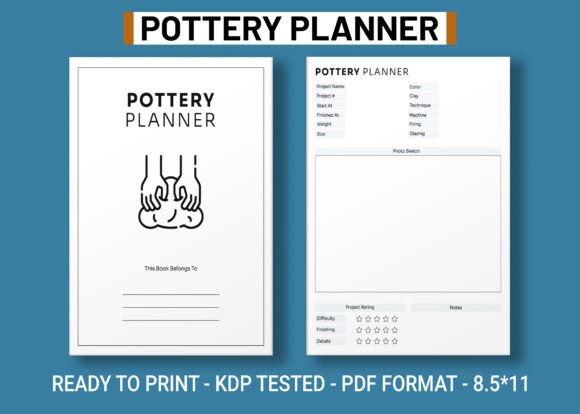
At its core, the Pottery Planner KDP Interior is a pre-designed, ready-to-upload digital file package intended for self-publishers creating a pottery-themed planner or logbook. The package includes an editable AI file, high-resolution PDF and PNG files, and a standard 8.5 x 11-inch page size. With 120 total pages, an introductory page, and a layout that has been tested for KDP compliance, it removes much of the guesswork from the interior design phase.
What sets this interior apart is its niche focus. Instead of a generic planner template that requires extensive customization, this interior comes with a pottery-specific structure. While the exact content of the pages is not detailed in the listing, the format is clearly built around the needs of potters—whether for tracking glazes, recording firing schedules, sketching forms, or planning studio sessions. For a publisher without design experience, this can be a significant time-saver. For someone familiar with design software like Adobe Illustrator, the editable AI file allows further tailoring.
The inclusion of both PDF and PNG formats adds flexibility. PDFs ensure clean, print-ready output, while PNGs can be useful for digital previews, mockups, or integration into other platforms. The fact that the interior is described as “with bleed” is also worth noting: bleed ensures that background colors or images extend to the edge of the page after trimming, which is essential for a professional finish on Amazon’s print-on-demand service.
Comparing the Pottery Planner KDP Interior with Other KDP Interior Options
Self-publishers typically have three broad approaches when it comes to interiors: buying a niche-specific template like this one, using a generic planner template, or designing from scratch. Each path has its own set of strengths and tradeoffs.
Niche-specific interiors like the Pottery Planner KDP Interior are built for a particular audience. They often include themed headings, pottery-related icons or borders, and page layouts that reflect common tasks in a pottery studio. The main advantage is relevance: the interior feels intentional and targeted, which can lead to higher conversion rates if your audience values that level of detail. The tradeoff is that the niche may be narrow. If you plan to sell the same interior across multiple topics—say, a general gratitude journal or a fitness log—this level of specificity becomes a limitation rather than a strength.
Generic planner interiors offer broad appeal and can be sold to a wider audience. They typically use neutral colors, simple layouts, and non-themed prompts. While they require less market research, they also demand more from the publisher in terms of branding and marketing to stand out. A generic interior might also need additional content or customization to feel relevant to potters, which can eat into the time savings that pre-made interiors are supposed to provide.
Custom design from scratch gives total control over every element, from page count to typography to illustration style. This is the best option for experienced designers or for publishers who want a truly unique product. However, it requires significant time, software skills, and a solid understanding of KDP’s technical requirements (including bleed, margins, and PDF standards). For many self-publishers, the tradeoff between control and convenience leans toward a pre-made interior.
In this landscape, the Pottery Planner KDP Interior occupies a middle ground: it offers more thematic relevance than a generic template, but less flexibility than a custom build. For a publisher targeting pottery enthusiasts specifically, this is often a practical compromise.
Who Benefits Most from This Type of Interior?
The ideal user for a pottery-specific KDP interior is a self-publisher who wants to launch a book quickly without compromising on thematic fit. This could be a pottery teacher creating a planner for students, a studio owner putting together a logbook for kiln firings, or a publisher who regularly produces niche hobby journals and wants to add a pottery option to their catalog without starting from zero.
Another strong fit is the publisher who values a tested, compliant file. The listing explicitly states that the interior is KDP tested and ready to upload. For someone unfamiliar with KDP’s print specifications, this is a real advantage. Mistakes in bleed margins, trim size, or PDF settings can cause books to be rejected or printed incorrectly. A pretested interior eliminates those risks, provided the publisher uses the files as intended.
On the other hand, if your target audience is more general—say, a journal for all types of artists, or a planner for creative professionals across multiple media—then a pottery-specific interior may feel too restrictive. The pottery-themed elements (page titles, imagery, prompts) might not resonate with painters, illustrators, or sculptors working in other materials. In that case, a more neutral interior with broader appeal would serve better.
Likewise, if you value total creative control, the pre-set layout and theme may feel constraining. While the AI file is editable, the structure is already in place. Significant redesign work might require as much effort as starting from scratch, which defeats the purpose of using a pre-made interior.
Key Decision Factors When Choosing a KDP Interior
Beyond the niche versus generic question, several practical factors can influence your decision when evaluating the Pottery Planner KDP Interior or any similar product.
Page count and content density. At 120 pages, this interior offers a substantial book. For a planner meant to last a full year of weekly use, 120 pages might feel thin. But for a logbook or a journal with fewer structured entries, it could be just right. Consider how many pages your target buyer expects. If you need a 200-page book, this interior would require expansion—either by duplicating pages or by adding supplementary sections.
Bleed and trim size. The interior is designed with bleed and uses the standard 8.5 x 11-inch size. This is the most common trim size for US-trade paperback interiors, which keeps printing costs reasonable. Some publishers prefer 6 x 9 inches for certain genres, but for planners and logs, the larger size is often more practical. If you want a different trim size, you would need to reformat the files, which could be time-consuming.
File format flexibility. The inclusion of an editable AI file is a significant advantage. You can modify colors, text, and layout elements without needing to rebuild the entire interior. The PDF files are ideal for direct upload, while the PNG files can be used for digital mockups or promotional materials. This multi-format approach supports a smooth workflow from design to listing creation.
Intro page and structure. The presence of an introductory page adds a professional touch. It also sets the tone for the book and can be used for a brief user guide or a personal message. If you plan to brand the book with your own introduction, you can edit the AI file accordingly.
Practical Examples and Use Cases
Consider a pottery studio owner who wants to sell a kiln logbook on Amazon. They need an interior with space for recording cone numbers, firing temperatures, glaze combinations, and notes on results. The Pottery Planner KDP Interior, with its pottery focus, likely includes sections that align closely with these needs. They can add their own branding through the AI file, upload the PDF to KDP, and have a product live within hours. This is a realistic, low-friction scenario.
Now consider a publisher who already sells a series of art journal interiors and wants to expand into pottery. The same interior file can serve as a starting point, but the publisher may want to adjust the page headers or add new prompts to differentiate their version. Because the AI file is editable, this is achievable without a full redesign. However, if the publisher wanted a completely different layout—say, a grid-based glaze database with multi-row entries—the pre-designed structure might not accommodate that without extensive rework.
Another example: a teacher creating a classroom pottery planner for students. They might need 30 copies, but print-on-demand pricing makes single copies viable. They can upload the interior exactly as provided, with only a cover change, and order a proof. If the interior feels too generic within its niche (e.g., it lacks space for student names or class dates), the teacher would need to edit the AI file. The more aligned the pre-made content is with the end user’s expectations, the less work is required.
Limitations and Tradeoffs to Consider
No pre-made interior is perfect for every situation, and the Pottery Planner KDP Interior has its own constraints. One limitation is the absence of detailed previews of the actual page layouts in the listing description. While the format and features are listed, the publisher must rely on the sample files to verify that the interior’s content matches their vision. If the interior uses specific pottery terminology, icons, or section headers that don’t align with the publisher’s brand voice, editing those elements becomes necessary.
Another tradeoff is the page count. 120 pages may be ideal for a compact logbook or a semester-long planner, but it may feel insufficient for a comprehensive year-long journal with daily entries. A publisher who needs more pages could duplicate sections, but this can lead to a repetitive feel. Some publishers prefer interiors with a higher baseline page count to avoid this issue.
Additionally, because the interior is designed for a specific niche, it may not resell well across multiple categories. If you plan to use the same interior file for a gardening log, a fitness tracker, or a budget planner, the pottery theme would be mismatched. For publishers who want a versatile template that covers multiple niches, a more generic option with customizable elements is usually a better investment.
Finally, while the AI file offers editability, it requires access to Adobe Illustrator or a compatible vector editing program. Not all self-publishers have that software or the skills to use it effectively. If you cannot edit the file, you are limited to the original design, which may or may not fit your needs.
Making an Informed Decision
Choosing a KDP interior ultimately comes down to how well it serves your target audience and your own workflow. The Pottery Planner KDP Interior is a strong candidate if you are publishing a pottery-themed book and you value a fast, tested, and reasonably flexible solution. The blend of editable and print-ready files, combined with a niche focus, makes it a practical option for many self-publishers.
However, if your audience expects a broader creative journal, if you need a different page count or trim size, or if you want total design control, you may need to look at other options. In those cases, either a more generic interior or a fully custom layout might serve you better. The key is to match the interior’s strengths with your project’s specific demands.
By taking the time to evaluate page count, bleed requirements, file format needs, and the degree of thematic fit, you can choose an interior that saves you time without compromising the quality of your final book. The Pottery Planner KDP Interior is one of many tools available—and when it fits, it fits well.