Walls Logic Puzzle: Building Mental Models for Strategic Decision-Making
When you first encounter a Walls Logic Puzzle, the grid and the numbered clues may look like a simple diversion. But beneath that modest surface lies a surprisingly robust framework for training the mind to think in structures, constraints, and trade-offs. For entrepreneurs, educators, content creators, and decision-makers who deal with complex problems daily, this style of puzzle offers more than just a few minutes of idle fun. It sharpens the very mental muscles required for strategic planning, resource allocation, and operational clarity.
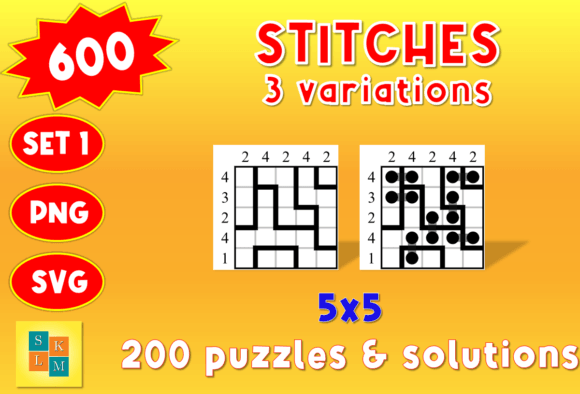
The Walls puzzle, sometimes called Four Winds, asks you to draw walls around numbered cells so that each number indicates exactly how many cells are enclosed in its region. No wall may touch another wall edge-to-edge, and every cell must belong to exactly one region. This set of constraints creates a closed system where every decision affects every other. Sound familiar? That is precisely the kind of environment you navigate in business, product development, or any goal-oriented undertaking.
What Makes the Walls Puzzle Distinct from Other Logic Games
Most logic puzzles rely on deduction within a fixed set of rules. Sudoku uses rows, columns, and boxes. Nonograms use pixel patterns. Crosswords rely on vocabulary and general knowledge. Walls is different because it combines spatial reasoning with numerical constraints and adjacency rules. You are not simply filling in blanks. You are constructing boundaries in real time, and each boundary you draw eliminates possibilities for the rest of the grid.
This mirrors the experience of building a strategy. Every decision you make about where to allocate resources, which market to enter, or what feature to prioritize creates a boundary that shapes your remaining options. Learning to solve Walls puzzles trains you to hold multiple constraints in your head simultaneously and to test the consequences of a single move before committing to it.
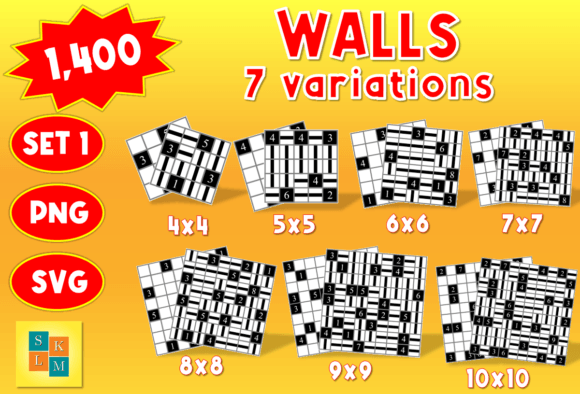
The collection available here spans seven grid sizes from 4x4 to 10x10, with 200 puzzles per size and a total of 1,400 puzzles. That progression is not accidental. Starting with the smallest grids lets you internalize the rules and develop a feel for the logic before moving to larger, more demanding configurations. This is the same principle behind skill development in any domain: scaffold the complexity so that the learner builds fluency at each level before advancing.
Strategic Thinking in a Contained System
Strategy is, at its core, the art of making choices under constraints. A Walls Logic Puzzle presents you with a finite grid, a fixed set of numbered clues, and a clear success condition. There is no ambiguity about what you are trying to achieve. Yet the path to the solution is rarely obvious. You must reason from the given information, identify cells that can only belong to one region, and eliminate possibilities step by step.
This process has direct parallels to strategic planning. When you map out a quarter's goals for your business or a content calendar for your blog, you are working within a bounded system. You have limited time, finite resources, and a set of objectives. The Walls puzzle teaches you to look for the most constrained parts of the system first—the cells with the lowest number of possible neighbors, the clues that force a specific shape. In strategy, this translates to identifying your biggest bottlenecks or your most time-sensitive dependencies and addressing them before they become crises.
Experienced solvers develop a habit of scanning the grid for what is called a "forced move." This is a cell where only one possible wall placement works given the existing clues. In strategic terms, a forced move is a decision that is dictated by circumstances rather than preference. Recognizing these moments saves time and reduces cognitive load, freeing you to focus on the genuinely uncertain choices.
Planning with the End in Mind: Reverse Engineering a Solution
One effective approach to Walls puzzles is to consider what the final solved grid must look like. Because every cell must be enclosed in a region, and because regions cannot share edges, you can often predict the shape of a region before you have drawn all its walls. This is reverse engineering applied to a logic problem, and it is a skill that transfers directly to project planning and product design.
When you start a new initiative, it helps to visualize the desired outcome clearly. What does success look like? What constraints must be satisfied? In a Walls puzzle, the number in each cell tells you exactly how many cells its region must contain. That is your outcome. Your task is to build a shape that matches that number while respecting the adjacency rule. In business, your outcome might be a revenue target, a customer satisfaction score, or a launch date. The constraints are your budget, your team's capacity, and the market realities.
Solving the puzzle forces you to iterate: you propose a shape, test its consequences, and revise if it leads to a contradiction. This iterative testing is exactly what sound planning requires. You do not commit to a full strategy on the first draft. You sketch, check for conflicts, and adjust. The Walls puzzle makes this cycle visible and immediate, giving you rapid feedback on the quality of your reasoning.
Risk Awareness: What Happens When You Solve Without a Goal
It is possible to complete a Walls puzzle mechanically—placing walls based on local deductions without ever holding the full picture in mind. Some solvers treat it as a rote exercise, moving from one forced move to the next without considering why the solution works as a whole. This approach will still get you to the answer, but it misses the deeper value of the exercise.
The same risk exists when you apply strategic tools without clarity of purpose. You can fill out a SWOT analysis, create a Gantt chart, or run a competitive audit without ever linking those activities to a meaningful goal. The result is busywork that looks like progress but does not improve outcomes. If you approach the Walls puzzle as a mental workout rather than a puzzle to be solved with intent, you forfeit the opportunity to practice deliberate reasoning under constraints.
To get the full benefit, pause after each deduction and ask yourself: "What does this move tell me about the rest of the grid? What possibilities have I eliminated? What new information do I now have?" This reflective pause is the same habit that separates effective decision-makers from those who simply react. In a business context, it means asking not just "Can we do this?" but "If we do this, what becomes impossible or harder?"
When and How to Use the Puzzle Collection Intentionally
Having 1,400 puzzles at your disposal means you can use this resource strategically rather than sporadically. Here are several ways to integrate Walls puzzles into your routine with clear intent:
- Morning mental warm-up. Solving a single 4x4 or 5x5 puzzle before you start your workday can shift your brain into a structured thinking mode. It primes you to look for constraints and patterns in the problems you face later.
- Team building and collaborative reasoning. Project a 6x6 or 7x7 puzzle on a screen and solve it as a group. Discuss why certain moves are forced and where multiple possibilities exist. This reveals how different people approach the same constraints, which is valuable for improving team decision-making processes.
- Teaching tool for new managers. First-time managers often struggle with the idea that their decisions have ripple effects. Walking through a Walls puzzle together illustrates this principle concretely. A wall placed in one corner of the grid can determine the shape of a region in the opposite corner.
- Creative problem-solving reset. When you feel stuck on a project, step away and solve a larger puzzle, such as 8x8 or 9x10. The mental shift from an open-ended creative problem to a bounded logical one can break fixation and let your subconscious work on the original problem.
- Productivity audit tool. Treat your to-do list as a grid of constraints. Which tasks are forced moves? Which tasks depend on others being completed first? The Walls logic of adjacency and enclosure can help you see dependencies you might otherwise miss.
The attached notes in the collection explain the rules clearly and suggest recommended tools for creating your own puzzle books. If you are a publisher or content creator, this format is particularly useful because it gives you a ready-made product line with scalable difficulty. You can bundle sets by size, create themed books, or use the SVG and PNG files to produce digital or print versions with minimal effort.
From Puzzle Grid to Operational Clarity
Operations are about designing systems that work reliably under constraints. A factory floor, a customer support workflow, or a content publishing pipeline all have the same character as a Walls puzzle: they consist of discrete units that must be arranged so that each part functions without interfering with its neighbors. The adjacency rule in Walls—no two walls touching edge-to-edge—is a metaphor for operational buffers and clear boundaries between responsibilities.
When you solve a 10x10 Walls puzzle, you are practicing the kind of large-scale reasoning that operations managers use every day. You learn to see the whole system before focusing on any one part. You develop a sense for when a decision in one area will create problems in another. And you build the patience to test multiple configurations before committing to a final layout.
For entrepreneurs building a business from scratch, this skill is invaluable. Early-stage companies often face resource constraints that resemble the tightest Walls puzzles: every cell must be filled, every number must be satisfied, and no region can encroach on another. Learning to solve for these conditions in a puzzle context makes it easier to recognize them in the real world.
Long-Term Cognitive and Professional Benefits
Regular engagement with logical deduction puzzles has been linked to improved working memory, better attention to detail, and slower cognitive decline in aging adults. But the specific value of Walls puzzles lies in their spatial and relational nature. Unlike verbal puzzles that rely on language skills, Walls puzzles are non-verbal and visual. They strengthen the ability to reason about relationships between objects in space, which is a form of intelligence that underlies many professional competencies—from architecture and engineering to data visualization and user experience design.
From a branding perspective, offering a collection like this positions you as someone who values mental rigor and thoughtful design. If you are a blogger or content creator, writing about your experience with different grid sizes and the strategies you developed can attract an audience that appreciates depth over speed. If you are a publisher, the clean SVG and PNG files mean you can produce polished products quickly, with consistent visual quality across all seven sizes.
The 200-puzzle count per size is generous enough to allow for genuine skill development. You can track your solving speed, identify which sizes challenge you most, and notice patterns in how you approach the clues. Over the course of 1,400 puzzles, you will likely develop intuitions about grid geometry that you did not have before. Those intuitions will serve you in any domain where structure and constraints matter.
What to Consider Before Diving In
Not every day is a good day for a high-difficulty puzzle. If you are already mentally fatigued, attempting a 10x10 grid may lead to frustration rather than insight. The key is to match the puzzle size to your current cognitive state and your goal for the session. A 4x4 puzzle takes perhaps two minutes and gives you a quick sense of accomplishment. A 9x10 puzzle might take twenty minutes and require sustained concentration. Choose accordingly.
Also consider the format. The included files are SVG and PNG, which are excellent for screen use and for print production. If you plan to solve on paper, you can print them directly. If you prefer solving on a tablet, the SVG files scale cleanly. The notes on recommended tools will help you select software for editing or compiling the puzzles if you intend to create your own derivative products.
Finally, remember that the goal is not to complete all 1,400 puzzles as quickly as possible. The goal is to use the puzzles as a deliberate practice tool. Solve one, reflect on your approach, and apply any lessons to the real-world decisions you face. Over time, the habit of structured reasoning will become automatic, and you will find yourself noticing constraints and opportunities in your work that you previously overlooked.
Whether you are a creator looking for a reliable product line, a professional seeking to sharpen your analytical edge, or simply someone who enjoys a well-designed mental challenge, the Walls Logic Puzzle collection offers a substantial and practical resource. Treat it as a gym for your decision-making abilities, and you will get far more than entertainment from the time you invest.