Editable Weekly Planner Kdp Interior: What to Check Before You Buy or Design
When you are preparing to publish a planner on Amazon KDP, the interior design can make or break your listing. An editable weekly planner KDP interior gives you a ready-to-use layout that you can customize before uploading. It sounds straightforward, but many creators rush into choosing or modifying their interior without checking a few key details. This often leads to rejected files, poor print quality, or a planner that does not resonate with buyers.
I have worked with dozens of these interiors, and I have seen the same oversights again and again. The good news is that most of these problems are easy to fix once you know what to look for. Whether you are a beginner putting together your first planner or an experienced seller refining your workflow, paying attention to the details of your editable weekly planner KDP interior will save you time, money, and frustration.
Why an Editable Weekly Planner KDP Interior Matters More Than You Think
An editable weekly planner KDP interior is essentially a digital template that contains the pages of your planner. It typically includes spaces for weekly schedules, to-do lists, notes, and sometimes habit trackers or goal sections. The "editable" part means you can change elements like colors, fonts, dates, and layout before you export your final file.
What makes these interiors so appealing is the combination of convenience and control. You do not have to design every page from scratch, but you still get to put your own brand or style on the product. For busy professionals, freelancers, and small business owners, this balance is ideal. You can launch a new planner in days instead of weeks.
But here is where many people slip. They download an interior, make a few superficial changes, and upload it without testing. That rushed approach can result in a product that looks unprofessional on print or fails KDP's formatting requirements. Understanding what a quality interior includes will help you avoid those pitfalls.
Overlooking Bleed Settings and Page Dimensions
One of the most common mistakes I see is ignoring the bleed setting. Your editable weekly planner KDP interior may offer both "bleed" and "no bleed" options. If you are not sure what these mean, you are not alone. But this detail affects whether your planner prints correctly.
Bleed refers to the extra space around the edges of each page that gets trimmed off during printing. If your interior includes elements that extend to the very edge of the page, you need the bleed version to avoid white margins after trimming. No bleed is fine if your design has clear margins and nothing touches the edge.
Many creators pick the wrong version and only discover the problem when their proof arrives with uneven borders or cut-off content. Worse, they might skip proofing altogether and end up with customer complaints. Always confirm whether your chosen interior requires bleed before you start editing. The product you described includes both options, which is helpful. But you still need to choose the one that matches your specific design choices.
Ignoring the Source File Format
Not all editable files are created equal. You might receive your interior in AI, EPS, PDF, PNG, or JPEG formats. Each has its strengths, but they also have limitations.
AI and EPS files are vector-based. This means you can scale elements without losing quality, and you can change almost everything—colors, shapes, text, and layout. These formats are ideal if you have design software like Adobe Illustrator. However, if you are not comfortable with vector editing, you might accidentally shift elements or distort proportions.
PDF files are more locked but still editable in programs like Adobe Acrobat or Canva Pro. Some creators prefer PDF because it preserves the layout exactly. PNG and JPEG are raster formats. They are fine for static previews, but not great for deep customization. If you try to edit text on a JPEG, you will likely degrade the image quality.
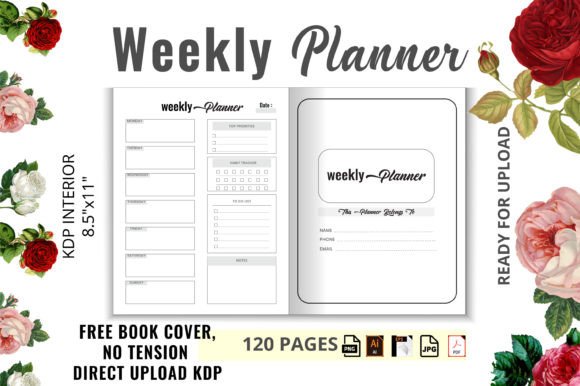
The takeaway is this: check which format comes with your editable weekly planner KDP interior and make sure it matches your skill level and software. The interior you are considering includes AI, EPS, PDF, PNG, and JPEG files, plus a free editable cover. That gives you flexibility. Choose the format that lets you make changes cleanly without introducing errors.
Skipping the Intro Page and Belongs-To Page
A minor detail that many overlook is the inclusion of an intro page and a "belongs to" page. Your interior includes these, which is a good sign. These pages add a professional touch and help the user feel a personal connection to the planner. But I have seen creators remove them during editing because they thought the pages were "extra fluff."
That is a mistake. Buyers expect a planner to feel complete. A simple intro page sets the tone, and a belongs-to page makes the product feel personal. If you delete these, you are stripping away value. Keep them, and consider customizing the intro page with a short welcome message or a note about how to use the planner. It takes two minutes and adds authenticity that readers appreciate.
Neglecting to Test the PDF Before Uploading
Even if your interior looks perfect on screen, the PDF you upload to KDP can have hidden issues. I have seen interiors where font outlines were not embedded, causing text to shift or appear garbled after upload. I have also seen files with missing margins or incorrect page counts.
The interior you are working with is described as "KDP tested," which means it has likely passed basic checks. But that does not mean your edited version will pass. Every time you make a change—adding text, moving an element, swapping a color—you introduce the possibility of a formatting error.
Before you upload, export your final PDF and run it through KDP's preview tool. Check every page, not just the first few. Look for alignment issues, missing content, and font problems. If you are printing with bleed, verify that elements extend properly into the bleed area. This step is not optional. It is the difference between a smooth launch and a frustrating rejection.
Choosing a Design Style That Does Not Match Your Audience
Your editable weekly planner KDP interior likely comes with a certain aesthetic. Maybe it is minimalist, colorful, floral, or modern. Many creators pick a design they personally like without considering whether it fits their target audience.
If you are selling to busy professionals, they might prefer clean, monochrome layouts with plenty of space for notes. If your audience is creative freelancers or hobbyists, bold colors and playful fonts could work well. Educators might appreciate structured layouts with clear sections for each day.
Mismatching the design to the audience leads to low conversion rates. The interior features are the same, but the visual tone sends a message. Spend time looking at what sells well in your niche and use that as a guide. You can always adjust colors and fonts to better suit your buyers without changing the core layout.
Forgetting about the Cover
The interior is only half of your product. The cover is what gets people to click. Your package includes a free editable 2024 book cover, which is a valuable addition. But a free cover still requires work.
I have seen creators use the cover template as-is without any personalization. That results in a generic look that blends into the crowd. Even a few small changes—updating the title font, changing the background color, adding your brand logo—can make the cover feel unique. The cover should hint at the style inside so buyers know what to expect.
Also, make sure your cover dimensions match your interior trim size. An 8.5 x 11 interior needs an 8.5 x 11 cover (with additional bleed). If you mix sizes, KDP will flag the mismatch. The free cover included with your interior likely matches the trim size, but verify before you upload.
Over-Customizing and Losing the Original Quality
Being able to "change whatever you want" is a powerful feature, but it can backfire. I have watched creators over-edit their editable weekly planner KDP interior to the point where the original structure becomes messy. They add too many elements, shift columns, or replace fonts with ones that do not align with the grid.
The result is a planner that looks patched together rather than professionally designed. The original interior was likely created with balance in mind. Use that as your foundation. Make targeted changes that improve the design for your audience, but do not tear down the structure. If you want a completely original layout, you are better off starting from scratch rather than heavily modifying an existing interior.
A better approach is to change two or three things that matter most: the cover, the color scheme, and maybe the font family. Keep the rest of the layout intact. This preserves the print-ready quality while still giving you a distinct product.
Not Considering Print Quality and Paper Type
The interior file might be high-resolution, but how it looks on paper depends on your printer settings and paper choice. For KDP, you do not control the paper, but you can optimize your file for their standard options.
Dark backgrounds and heavy ink coverage can bleed through thin paper, making your planner look cheap. If your interior has dark headers or colored boxes, test a print sample before you publish. Many interior designs use light colors or white backgrounds specifically to avoid this issue. The product you are looking at mentions "high-quality print-ready PDF," which suggests it is designed with print constraints in mind. Still, if you add heavy graphics or dark shades during editing, you might introduce problems.
A simple rule: keep the background light and the text dark. This gives you the cleanest result on standard paper. If your audience expects premium paper, consider specifying that in your listing, but know that KDP's base options are limited.
Watching Out for Date Specificity
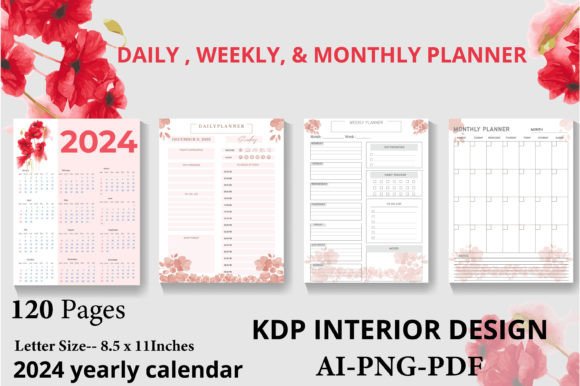
Your interior is described as a "2024" planner. That means the dates are either pre-filled or the layout is designed for a specific year. If you are selling this as an undated planner, you might need to remove or adjust the date references. Conversely, if you are selling dated planners, make sure the dates are correct and consistent throughout.
I have seen listings where the cover says 2024 but the interior pages have 2023 dates or no dates at all. This confuses buyers and leads to returns. Check every page where dates appear. If your interior is editable, you can simply replace the year or remove it to make the planner undated. Decide which approach works better for your target audience and be consistent.
Practical Steps to Get It Right
You can avoid nearly all these mistakes with a few deliberate actions. First, open the editable source file in the format you are most comfortable with. Make a backup copy before you start editing. Work methodically—update the cover, adjust the color palette, and check the intro and belongs-to pages.
Second, export your PDF using the same settings recommended by KDP. Use PDF/X-1a or PDF/X-4 standards if your software supports them. These standards ensure that fonts, colors, and images embed correctly.
Third, run the KDP preview tool and flip through every page. Pay special attention to the spine area for the cover and the margins on interior pages. If anything looks off, go back to your source file and fix it.
Finally, order a physical proof before you publish. A proof costs a few dollars but can save you from a batch of defective books. Look at the binding, the margin alignment, and the color accuracy. If the proof passes your standards, you are ready to go live.
An editable weekly planner KDP interior simplifies your workflow, but only if you use it carefully. The features you get—high-quality pages, multiple file formats, free cover, and KDP testing—give you a strong foundation. Build on that foundation with thoughtful edits and thorough checking. Your audience will notice the difference, and your sales will reflect the care you put into the product.