Master Your Finances with a Bill Payment Tracker Log Book That Adapts to You
Keeping track of monthly obligations can feel like a juggling act. Between due dates, varying amounts, and multiple accounts, it is easy to miss a payment. A Bill Payment Tracker Log Book provides a structured way to manage these responsibilities, ensuring nothing slips through the cracks. But not all log books are created equal. The modern approach demands flexibility, and that is exactly what an editable format delivers.
This article explores the practical role of a bill payment tracker, the qualities that make it effective, and why an editable version—specifically one that allows you to change fonts and design—offers distinct advantages for personal and professional use.
Why a Dedicated Bill Payment Tracker Matters
Relying solely on memory or scattered notes often leads to late fees, service interruptions, or unnecessary stress. A Bill Payment Tracker Log Book centralizes all your recurring expenses in one place. It acts as a single source of truth, whether you manage household bills, track client invoices, or oversee small business expenses.
The core purpose is straightforward: record each obligation before the due date, mark when it is paid, and maintain a clear history. This visibility helps you spot spending patterns, adjust budgets, and plan ahead. Without a tracker, you might not notice a creeping subscription cost or a utility rate increase until it hits your bank statement.
Qualities of an Effective Tracker
A useful tracker is more than just a grid of dates and amounts. It needs to be organized, durable, and adaptable. Key qualities include:
- Clear Layout: Columns for due date, payee, amount, payment method, and status (paid/unpaid) prevent confusion.
- Adequate Space: Each entry should have room for notes, confirmation numbers, or reminders.
- Monthly or Daily Options: Some prefer a month-at-a-glance view, while others need a daily breakdown for multiple transactions.
- Portability: A standard size such as 8.5" x 11" fits easily into a binder or folder, making it practical for desk use or on the go.
Embracing the Editable Advantage
Many log books are fixed—once printed, you cannot change the font size, column width, or design elements. Yet financial needs evolve. Maybe you need larger text for readability, or you prefer a minimalist look. An editable format removes these limitations.
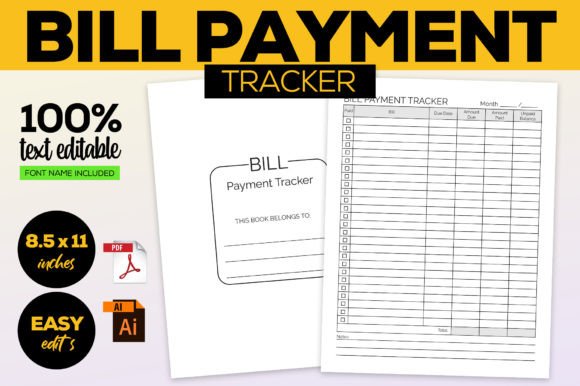
The product described offers a Bill Payment Tracker Log Book in 100% editable format, meaning you can easily change font and design as needed. This capability transforms a static template into a personalized tool. You are not locked into someone else's layout; you tailor the tracker to suit your specific workflow.
The editable nature comes through the inclusion of an AI file (Adobe Illustrator format). This file allows you to open the design in vector editing software and modify virtually any element—header styles, border thickness, row height, and more. Fonts are not included by default, but you can select your own from your system, ensuring the text aligns with your preferences.
Practical Benefits of Customization
Why go through the effort of editing a template? Consider these scenarios:
- Accessibility: If standard font sizes are too small, you can enlarge them without breaking the layout.
- Branding: Small business owners can add their logo and match company colors, creating a professional look for internal tracking.
- Language Options: Edit column headers to any language, making the tracker usable for multilingual households or teams.
- Paper Saving: Adjust margins or reduce spacing to fit more entries per page, lowering paper consumption.
How This Tracker Fits into Modern Workflows
In today's digital age, some might wonder why a paper-based log book still matters. The answer lies in tangibility and focus. Writing down payments manually reinforces memory and reduces screen fatigue. Many people find that physically checking off a bill provides a satisfying closure and a sense of accomplishment.
Yet the editable format bridges the gap between analog and digital. You can start with a PDF print-ready file, print as many copies as needed, and keep the original editable version for future modifications. The 110-page count offers substantial coverage—roughly nine months of monthly tracking or a shorter period with daily entries, depending on your bill volume.
For those who manage irregular expenses, such as quarterly taxes or annual subscriptions, the daily tracking option allows you to record any obligation on its specific date, not just the first of the month. This granularity helps avoid overlooked one-off payments.
Integration with Budgeting Practices
Using this tracker in conjunction with a budget creates a powerful financial management system. Record your anticipated bill amounts before the month begins. As you pay each one, note the actual amount and any variation. Over time, you will identify seasonal spikes, like higher heating bills in winter, and adjust accordingly.
The editable design lets you add extra columns for categories (utilities, debt, subscriptions) or for tracking payment confirmation numbers. You can even create a summary section at the end of each month to compare planned versus actual spending.
Key Specifications Explained
Understanding the technical details helps you evaluate if this tracker meets your needs. Here are the features broken down:
- Dimensions: 8.5" x 11" inches – a standard letter size that fits most binders, file cabinets, and printers. No need to trim or resize.
- Pages: 110 pages – sufficient for several months of detailed tracking. Each page can hold multiple entries, so the actual capacity depends on your formatting.
- File Format: PDF and AI (Adobe Illustrator). The PDF is print-ready and high resolution (300 DPI), ensuring crisp text and clean lines. The AI file allows editing of all elements (fonts not included).
- KDP Tested: The files have been tested on Amazon's Kindle Direct Publishing platform, so if you intend to upload and sell your own version, the formatting is verified to meet KDP standards.
- Print Ready: The PDF is optimized for print, with proper bleed and margins, making it straightforward to produce physical copies.
Considerations Before Choosing a Tracker
Not every log book suits every user. Before adopting a Bill Payment Tracker Log Book, think about the following:
- Frequency of Payments: If you have ten or more recurring bills each month, a monthly page might become crowded. Daily pages offer more space per entry.
- Need for Editing: Are you comfortable using design software like Adobe Illustrator? If yes, the editable format is a major asset. If not, the print-ready PDF works perfectly as-is.
- Long-Term Use: Consider whether you want a one-time print or the ability to reprint with modifications. The editable file allows you to update dates and layouts each year without repurchasing.
Practical Recommendations
To get the most out of your tracker, start by customizing the editable file before printing. Adjust font sizes to your liking—perhaps use a bold headline for the month and a legible sans-serif for entries. If you prefer to color-code by category, add a column for color, but remember you will need to hand-color or print in color.
Print a few test pages to check alignment and spacing. Because the file is 300 DPI, even small text remains sharp. For everyday use, place the tracker in a dedicated binder or clip it to a clipboard near your workstation. Develop a habit of reviewing it each evening or week, marking off payments as they occur.
For those running a home-based business, this tracker can separate personal and business bills. Simply use different sections or print separate copies with distinct headers. The editable design makes it easy to have multiple versions.
Examples of Effective Use
Imagine a freelance designer with five recurring software subscriptions, a monthly rent, and variable credit card payments. Using a daily tracking notebook, they list each payment on its due date, note the amount, and check it off. At a glance, they can see which cards have been paid and which subscriptions renew this week. The editable format allows them to rename columns to match their actual accounts, such as "Adobe Suite" instead of a generic "Subscription."
Another user might be a retiree managing utility bills, pension deposits, and health insurance premiums. A monthly layout with larger fonts helps them read without straining. By editing the AI file, they increase the font size and widen the rows for easier handwriting.
Final Thoughts on Adaptability and Reliability
A Bill Payment Tracker Log Book is not just a simple list; it is a tool for financial clarity. The editable version takes this concept further by putting the control in your hands. You decide how the pages look, what information you emphasize, and how often you print new copies. With 110 pages of high-resolution print-ready PDF and an AI format for deep editing, you have everything you need to set up a personalized tracking system.
Whether you are tackling personal bills, managing a household, or overseeing business expenses, the ability to change fonts and design ensures the tracker grows with your needs. No more forcing your workflow into a generic template. Instead, you create a log book that reflects your actual financial landscape—one that helps you stay organized, avoid late fees, and achieve greater peace of mind.